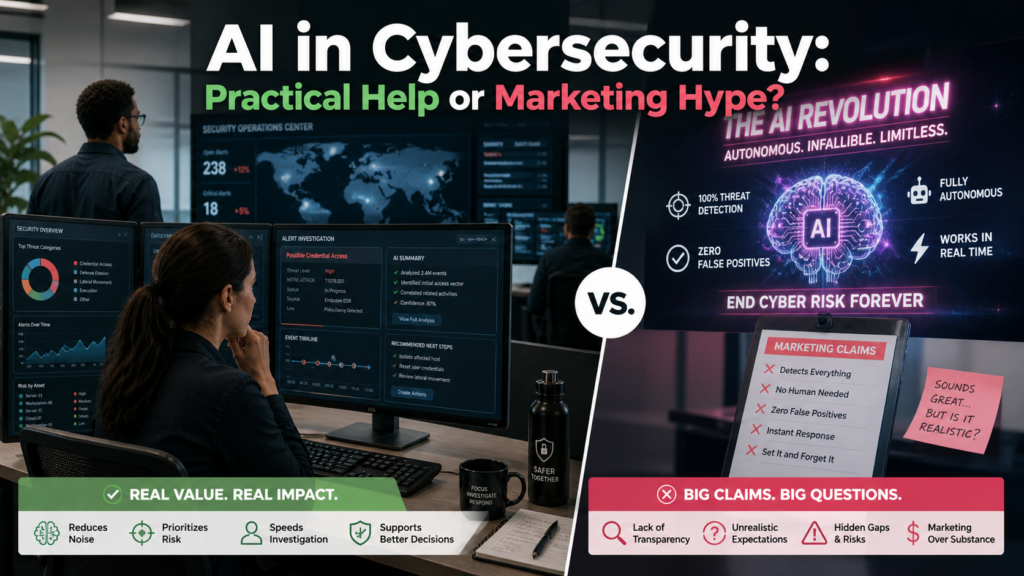
AI is now deeply embedded in cybersecurity marketing. Vendors position it as the answer to faster detection, stronger analysis, and smarter response. In some areas, those claims are supported by real capability. In others, the messaging is running ahead of the practical outcome.
That is why security teams need to be careful. AI in cybersecurity should be evaluated the same way any serious platform capability is evaluated: by asking what it actually improves, where it fits, and what limitations remain.
Where AI can be genuinely useful
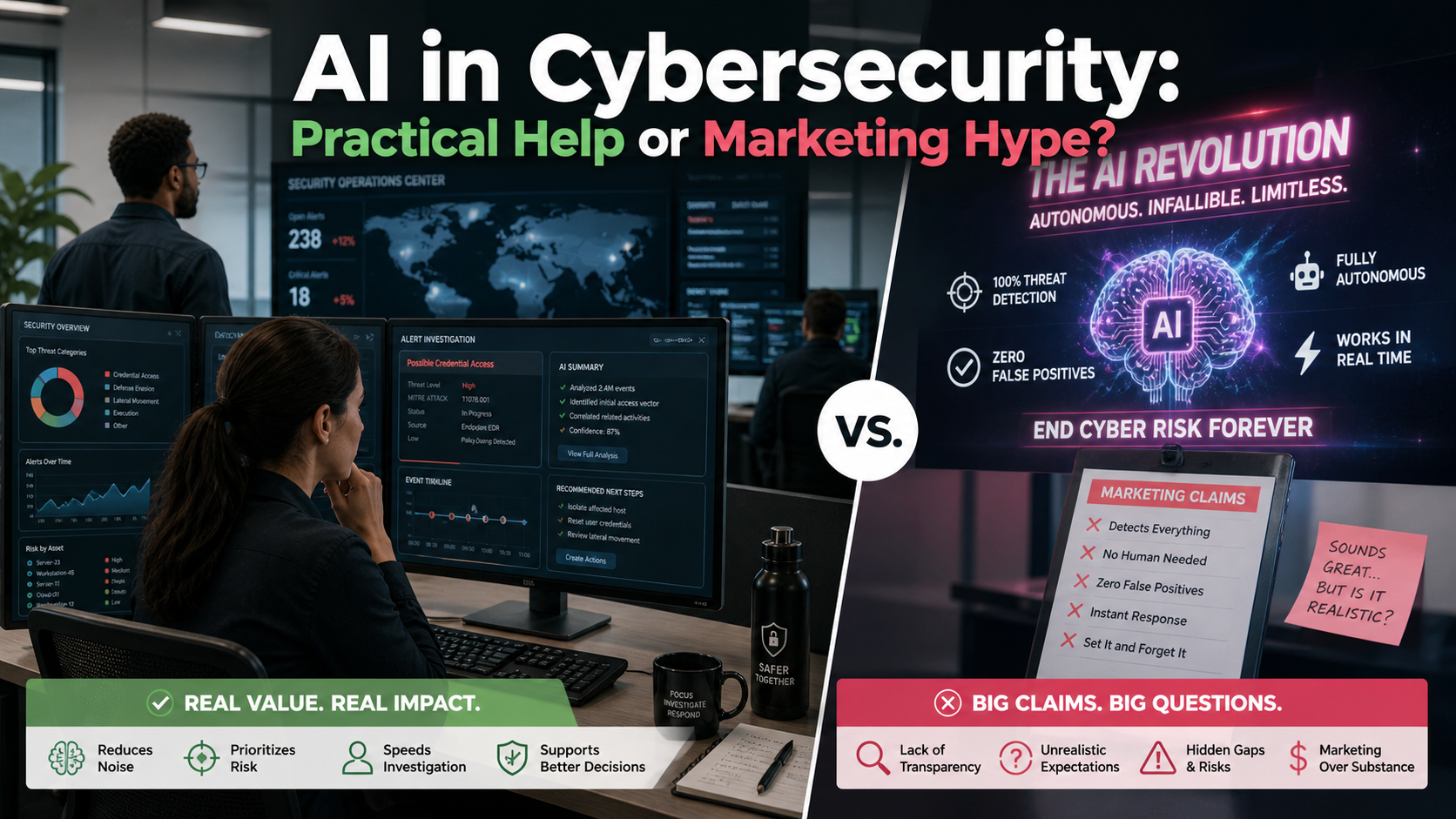
AI can help with detection support, prioritisation, anomaly review, and certain repetitive security workflows. It may improve visibility or reduce manual effort in environments with high event volume.
But usefulness depends heavily on the data model, product maturity, and how the system presents output. A tool that flags everything as suspicious is not necessarily intelligent. It may just be noisy.
Where the hype shows up
The hype appears when AI is used as a blanket label rather than a clear capability. Buyers often hear terms like “AI-driven”, “intelligent response”, or “autonomous detection” without enough explanation of what is actually happening under the hood.
That creates confusion and can lead teams to overestimate what the platform will do.
What buyers should evaluate
Security buyers should ask:
- what workflows AI is actually improving
- whether the outputs are explainable
- how much analyst oversight is still required
- how false positives are managed
- what the tool needs from the environment to perform well
Those questions usually tell you more than the branding.
Final takeaway
AI in cybersecurity can be useful, but it is not automatically a differentiator. The value depends on how the capability performs in real environments.
Compare security tools with more practical context on FixMyStackHub.