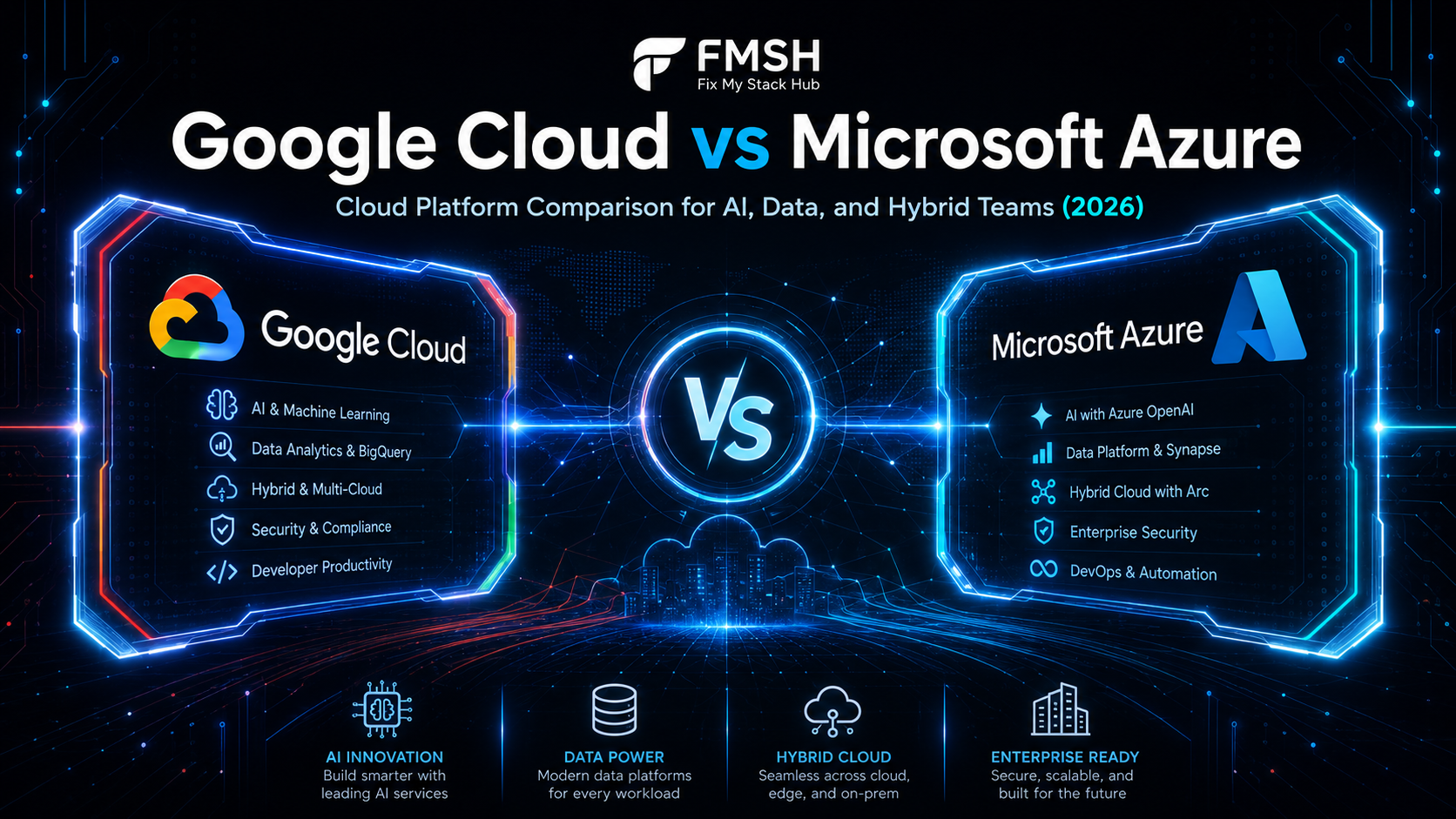
Choosing between Google Cloud and Microsoft Azure is a major cloud platform decision for modern enterprises. Both vendors are strong across infrastructure, AI, and enterprise workloads, but they are positioned differently. Google Cloud leans into AI, security, data, and hybrid and multi-cloud services, while Microsoft Azure emphasizes an open and flexible cloud computing platform backed by global infrastructure designed to support advanced AI.
That means the comparison is not just about running virtual machines or storage accounts. Buyers need to think about AI priorities, data platform strategy, hybrid operations, Microsoft ecosystem gravity, and whether their teams work more naturally in a Google-style AI and analytics environment or a Microsoft-style enterprise cloud and productivity environment. In this FixMyStackHub comparison, we break down Google Cloud vs Microsoft Azure across AI, data, hybrid fit, and business fit.
QUICK COMPARISON TABLE
| Category | Google Cloud | Microsoft Azure |
|---|---|---|
| Core Purpose | AI, data, security, and hybrid-focused cloud platform | Open and flexible enterprise cloud platform with global AI infrastructure |
| Ideal Customer | Teams prioritizing AI, analytics, and hybrid cloud strategy | Enterprises wanting broad cloud capabilities with strong Microsoft alignment |
| AI Positioning | Strong AI, data, and model platform story | Global AI infrastructure and broad enterprise AI service positioning |
| Data Strategy | Strong data and analytics centricity | Broad enterprise cloud plus Microsoft data and AI ecosystem fit |
| Hybrid Story | Clear hybrid and multi-cloud positioning | Strong enterprise hybrid appeal and Microsoft stack fit |
| Best Fit | AI, analytics, and data-driven cloud strategies | Microsoft-heavy enterprise cloud strategies |
What is Google Cloud?
Google Cloud is positioned as a cloud platform spanning AI, security, data management, and hybrid and multi-cloud services. Its value proposition is especially compelling for teams that see AI and analytics as major platform drivers rather than secondary capabilities.
Teams often choose Google Cloud when data architecture, AI services, and hybrid flexibility are central to how they evaluate cloud platforms.
What is Microsoft Azure?
Microsoft Azure is positioned as an open and flexible cloud computing platform, with global infrastructure designed to support advanced AI. Azure is also naturally strengthened by its connection to Microsoft’s broader enterprise ecosystem, including productivity, developer, security, and data tooling.
Organizations often choose Azure when cloud strategy is closely tied to Microsoft technologies, enterprise workloads, and integrated business operations.
Google Cloud vs Microsoft Azure: Key Differences
| Feature Area | Google Cloud | Microsoft Azure |
|---|---|---|
| Platform Identity | AI, data, and hybrid-forward cloud platform | Enterprise cloud platform with strong Microsoft ecosystem pull |
| AI Angle | AI and data synergy is central to the platform message | AI sits inside broad enterprise cloud and infrastructure strength |
| Data Strategy | Very strong analytics-led posture | Broader enterprise integration posture |
| Hybrid Fit | Strong hybrid and multi-cloud narrative | Strong enterprise hybrid appeal through Microsoft alignment |
| Best Fit | AI and analytics-led platform buyers | Microsoft-first enterprise platform buyers |
The main difference is ecosystem and workload bias. Google Cloud often makes more sense for teams whose cloud strategy is especially shaped by AI, analytics, and hybrid architecture. Azure often makes more sense for organizations that want strong enterprise cloud capabilities tightly aligned with the broader Microsoft ecosystem.
Pros and Cons
| Category | Google Cloud | Microsoft Azure |
|---|---|---|
| Strengths | Strong AI and data positioning Clear hybrid and multi-cloud story Good fit for analytics-heavy strategies | Strong enterprise cloud positioning Broad Microsoft ecosystem fit Global AI infrastructure story |
| Limitations | Appeal is strongest for AI, analytics, and data-led platform strategies | Appeal is strongest for Microsoft-aligned enterprise environments |
Which One Should You Choose?
Choose Google Cloud if your priority is AI, analytics, modern data architecture, and hybrid or multi-cloud flexibility.
Choose Microsoft Azure if your priority is enterprise cloud adoption with strong Microsoft ecosystem alignment and global AI infrastructure support.
Related Comparison
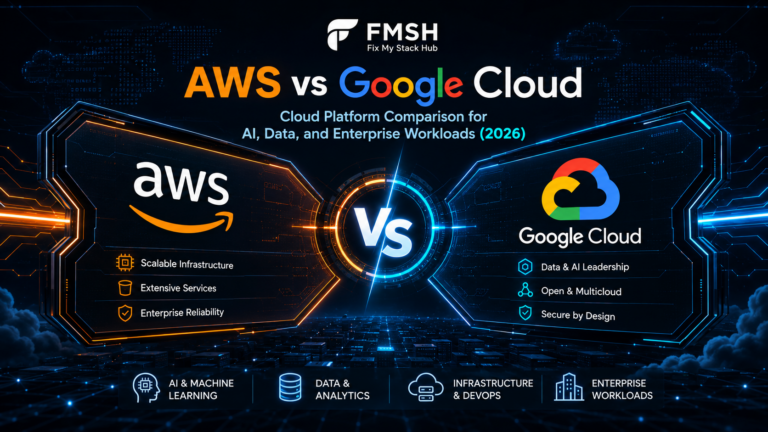
You may also want to compare AWS vs Google Cloud if you are still deciding between the broader cloud hyperscalers.
Official Links
Google Cloud official site and Microsoft Azure official site.