
AI tools are no longer sitting on the edge of business operations. They are becoming part of how modern teams write, research, automate, communicate, and make decisions. What started as curiosity has quickly turned into adoption.
For many businesses, the question is no longer whether AI should be used, but where it actually adds value. The strongest use cases are not always flashy. In many cases, AI is most useful when it removes repetitive work, speeds up internal processes, and helps teams focus on higher-value tasks.
That shift matters because software buying is also changing. Teams are no longer just evaluating single tools in isolation. They are asking how AI-powered tools fit into the wider stack, what data they touch, and whether they create more efficiency or more complexity.
Why this matters
Modern teams are under pressure to move faster without increasing headcount at the same rate. AI promises to help, but the outcome depends on where it is applied.
A team using AI to summarise meetings, draft first-pass content, or triage support issues may save meaningful time each week. But if AI is introduced without clear boundaries, it can also create noise, duplication, and governance concerns.
That is why businesses need to think beyond the hype. The real value of AI is not in adding “smart” features everywhere. It is in solving real workflow problems.
Where AI is having the biggest impact
AI is showing up most clearly in four areas.
First, content and communication. Teams are using AI for drafting emails, meeting summaries, internal documentation, and knowledge support. This reduces manual effort and helps people move faster.
Second, workflow automation. AI is increasingly used to trigger actions, classify information, and route tasks across systems. In the right environment, this can improve turnaround times and reduce admin overhead.
Third, support and operations. AI-powered assistants and copilots are helping teams respond to common questions, search internal knowledge faster, and reduce repetitive support work.
Fourth, analytics and decision support. Some tools now use AI to surface trends, recommend actions, or identify anomalies. That can be useful, but only when the underlying data is clean and the outputs are understandable.
What teams should evaluate before adopting AI tools
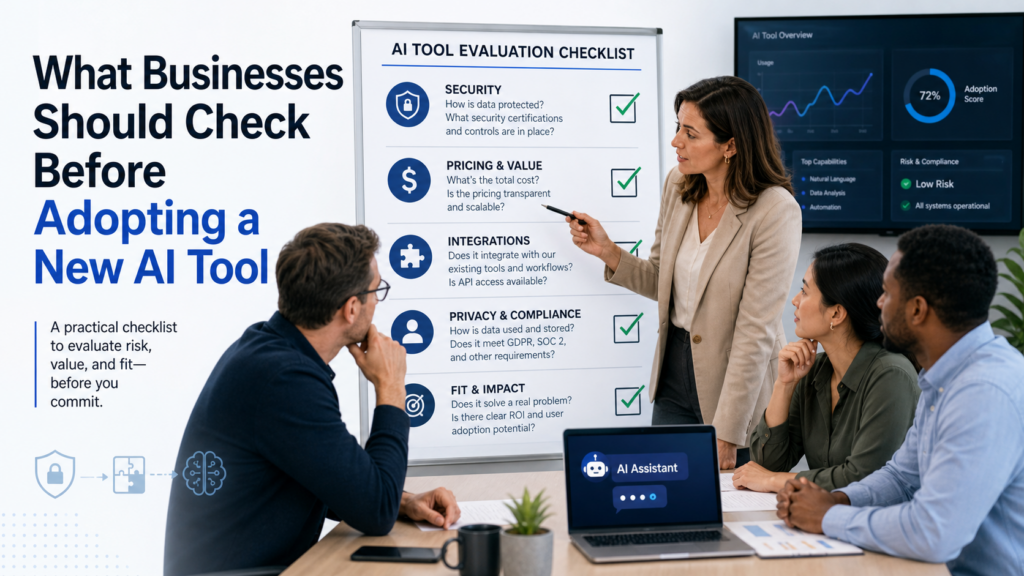
Before adding another AI tool to the stack, businesses should ask a few practical questions.
Does the tool solve a real problem, or is it simply adding a feature that looks impressive in a demo? Does it integrate properly with existing systems? What data does it access, and where does that data go? Is the output reliable enough to support real business workflows?
Those questions are more important than branding. A well-marketed AI feature does not automatically translate into operational value.
Final takeaway
AI is already changing how teams work, but not every use case is equally valuable. The businesses that benefit most are the ones that treat AI as part of a broader stack strategy, not just a shortcut.
Looking for tools that actually fit your workflow? Explore FixMyStackHub’s software comparisons and practical guidance.
Type your paragraph here