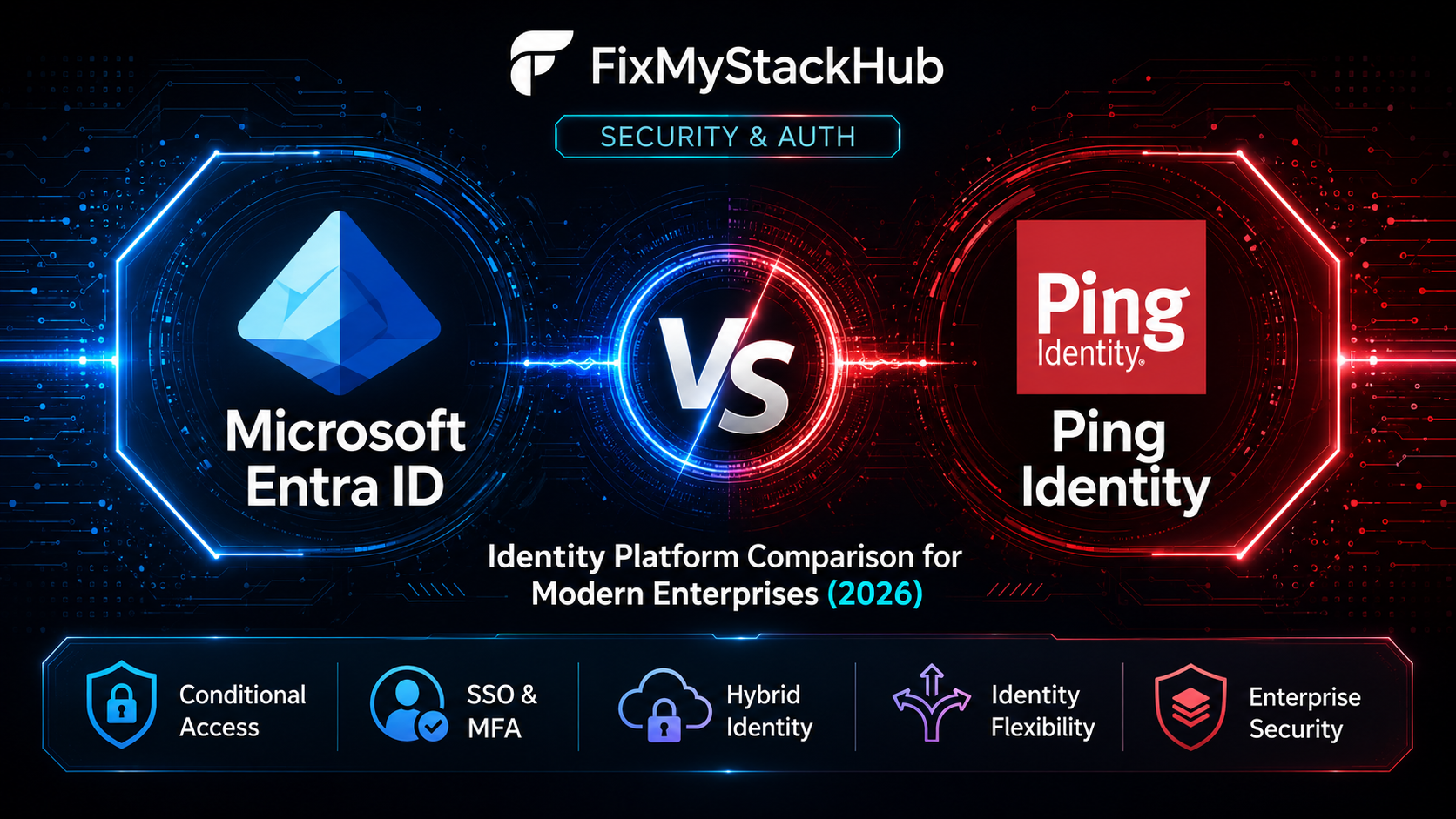
Choosing between Microsoft Entra ID and Ping Identity is a major access and identity decision for hybrid enterprises. Both platforms cover SSO, authentication, and secure access, but they approach the market differently. Microsoft Entra ID is positioned as a cloud IAM solution for securing identities and controlling access to applications, devices, and resources with strong authentication and risk-based conditional access. Ping Identity is positioned as a flexible identity platform for cloud, mobile, on-prem apps, and APIs.
That means the comparison is not just about whether both tools can handle SSO and MFA. Buyers need to think about ecosystem fit, hybrid identity strategy, policy-driven access control, and whether they want an IAM platform centered around Microsoft security architecture or broader standards-based identity flexibility. In this FixMyStackHub comparison, we break down Microsoft Entra ID vs Ping Identity across access control, hybrid fit, and business fit.
QUICK COMPARISON TABLE
| Category | Microsoft Entra ID | Ping Identity |
|---|---|---|
| Core Purpose | Cloud identity and access management solution | Flexible enterprise identity platform |
| Ideal Customer | Microsoft-centric organizations needing integrated access control | Enterprises needing standards-based identity flexibility |
| Access Positioning | Strong authentication and risk-based conditional access | Standards-based SSO and adaptive MFA |
| Hybrid Fit | Cloud and on-prem identity control in one central location | Strong support for mixed and customized identity environments |
| Product Feel | Integrated Microsoft IAM layer | More neutral identity infrastructure platform |
| Best Fit | Microsoft-first enterprises | Mixed or standards-heavy enterprise environments |
What is Microsoft Entra ID?
Microsoft Entra ID is Microsoft’s cloud identity and access management platform. Microsoft describes it as a solution that helps organizations manage identities, control access to apps and resources, use strong authentication, and apply risk-based conditional access policies in cloud and on-prem environments.
Teams often choose Microsoft Entra ID when they are already deep in Microsoft 365, Windows, Intune, and broader Microsoft security tooling and want identity to work as part of that wider operational stack.
What is Ping Identity?
Ping Identity is an IAM platform built around standards-based SSO, adaptive MFA, and flexible identity controls across cloud, on-prem, and custom environments. Ping’s SSO positioning especially emphasizes support for modern and legacy app access through standards like SAML, OIDC, WS-Fed, and OAuth.
Organizations often choose Ping when the identity layer needs to stay more flexible and standards-driven across varied enterprise systems rather than sitting mostly inside one large vendor ecosystem.
Microsoft Entra ID vs Ping Identity: Key Differences
| Feature Area | Microsoft Entra ID | Ping Identity |
|---|---|---|
| Identity Model | Cloud IAM with integrated Microsoft security controls | Identity platform built for flexibility and standards |
| Access Controls | Strong authentication and conditional access | Federation, SSO, and adaptive MFA depth |
| Ecosystem Gravity | Microsoft-centric | More vendor-neutral |
| Hybrid Positioning | Centralized identity across cloud and on-prem | Strong support for mixed and custom identity layers |
| Best Fit | Microsoft-first security and productivity stacks | Broader mixed-enterprise identity environments |
The main difference is ecosystem alignment. Microsoft Entra ID often makes more sense for organizations already committed to Microsoft infrastructure and security. Ping Identity often makes more sense for enterprises that need a more standards-heavy and flexible identity layer across mixed systems.
Pros and Cons
| Category | Microsoft Entra ID | Ping Identity |
|---|---|---|
| Strengths | Strong conditional access Integrated Microsoft security model Good centralized visibility |
Strong federation flexibility Better fit for mixed environments Standards-heavy identity depth |
| Limitations | Best fit is closely tied to Microsoft ecosystem gravity | Can feel more architecture-heavy for simpler environments |
Which One Should You Choose?
Choose Microsoft Entra ID if your priority is integrated access control inside a Microsoft-first environment.
Choose Ping Identity if your priority is standards-based flexibility, hybrid identity depth, and broader enterprise neutrality.
Related Comparison
You may also want to compare Ping Identity vs Okta if you are deciding between broader workforce identity platforms.
Official Links
Microsoft Entra ID official site and Ping Identity official site.