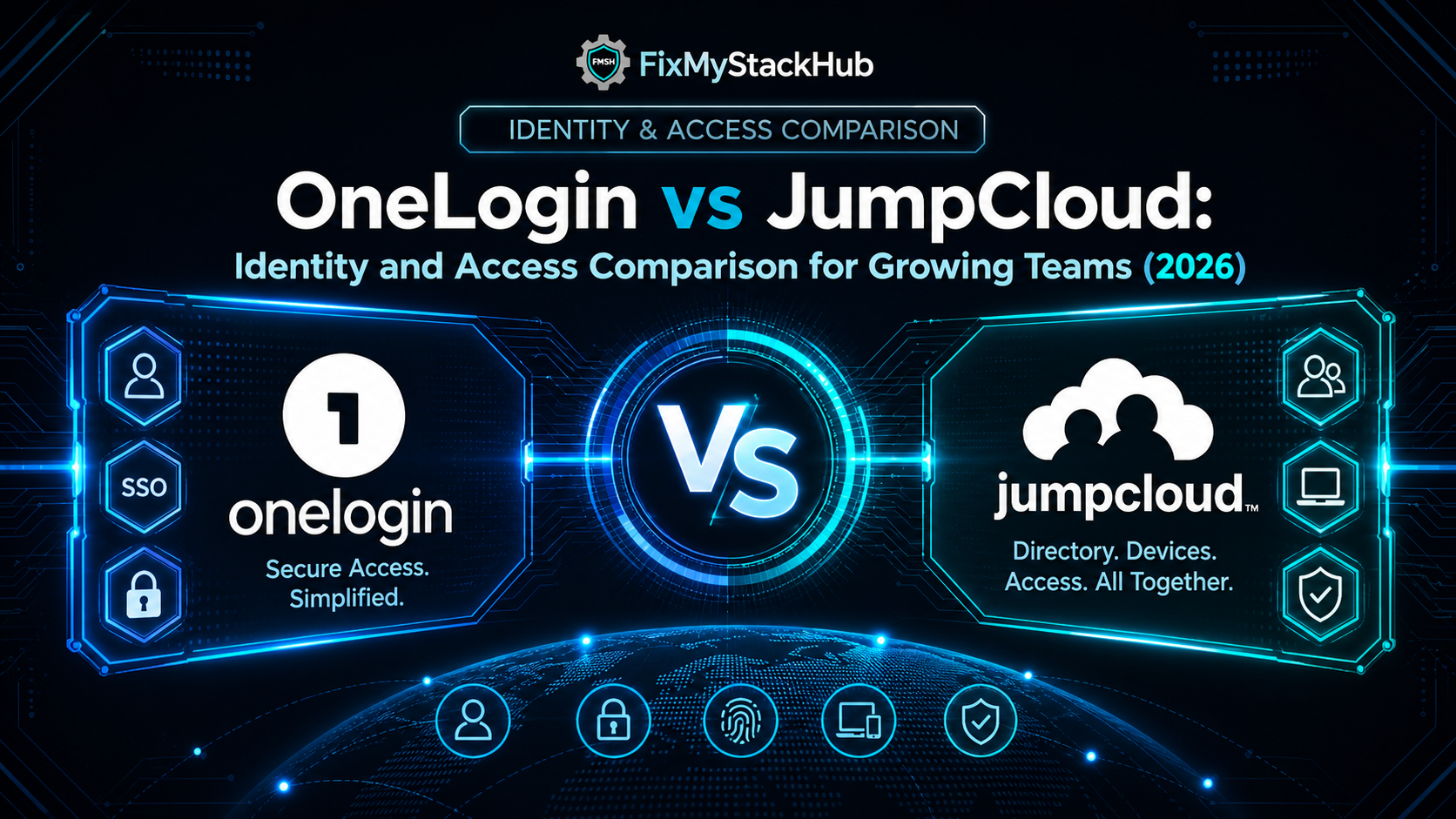
Businesses looking for a practical identity and access platform often end up considering OneLogin and JumpCloud, especially when they want a solution that is easier to manage than heavyweight enterprise identity suites but still capable enough for growing teams.
Although both platforms operate in the identity and access space, they are not positioned in exactly the same way. OneLogin is often viewed as an authentication and access control platform first, while JumpCloud brings more directory and device context into the discussion. In this comparison, we break down OneLogin vs JumpCloud across user management, SSO, MFA, directory needs, device relevance, and pricing fit.
QUICK COMPARISON TABLE
| Category | OneLogin | JumpCloud |
|---|---|---|
| Core Purpose | Identity and access management | Cloud directory and access platform |
| Ideal Customer | Teams focused on authentication and access control | Growing businesses needing identity plus directory/device context |
| SSO & MFA | Strong identity access basics | Strong identity plus broader IT relevance |
| Directory Services | Less central to positioning | More central to positioning |
| Device Support | Limited compared with JumpCloud’s angle | Stronger overlap with device/user management |
| Best Fit | Authentication-first buyers | IT teams needing broader cloud directory value |
What is OneLogin?
OneLogin is an identity and access management platform designed to simplify authentication, SSO, MFA, and user access across business applications.
Organizations often consider OneLogin when they want a more direct identity solution focused on access and authentication without jumping immediately to a much larger enterprise identity stack.
What is JumpCloud?
JumpCloud is a cloud directory and access platform that combines identity management with directory and device management relevance. It is often appealing to growing businesses that want broader user and access visibility across their IT environment.
OneLogin vs JumpCloud: Key Differences
| Feature Area | OneLogin | JumpCloud |
|---|---|---|
| Identity Focus | Authentication and access management first | Identity with broader directory/device context |
| Directory Role | Less central | More central |
| Device Relevance | More limited | More relevant for cloud-first IT teams |
| Admin Perspective | Simpler identity-first lens | More IT operations crossover |
| Best Use Case | SSO/MFA-focused environments | User/device/access visibility in one place |
Pros and Cons
| Category | OneLogin | JumpCloud |
|---|---|---|
| Strengths | Clear identity and access focus Strong SSO and MFA relevance Good for teams wanting straightforward IAM | Strong cloud directory value Broader IT relevance Good for growing teams managing users and devices |
| Limitations | Less broad beyond identity/access use cases | May be more than needed for teams only wanting basic SSO/MFA |
Which One Should You Choose?
Choose OneLogin if your main priority is authentication, SSO, and access control without needing broader directory and device overlap.
Choose JumpCloud if you want identity and access plus stronger cloud directory and device management relevance for a growing IT environment.
Related Comparison
You may also want to compare JumpCloud vs Microsoft Entra ID if your environment is expanding and you’re deciding between a more flexible cloud approach and a Microsoft-first identity model.