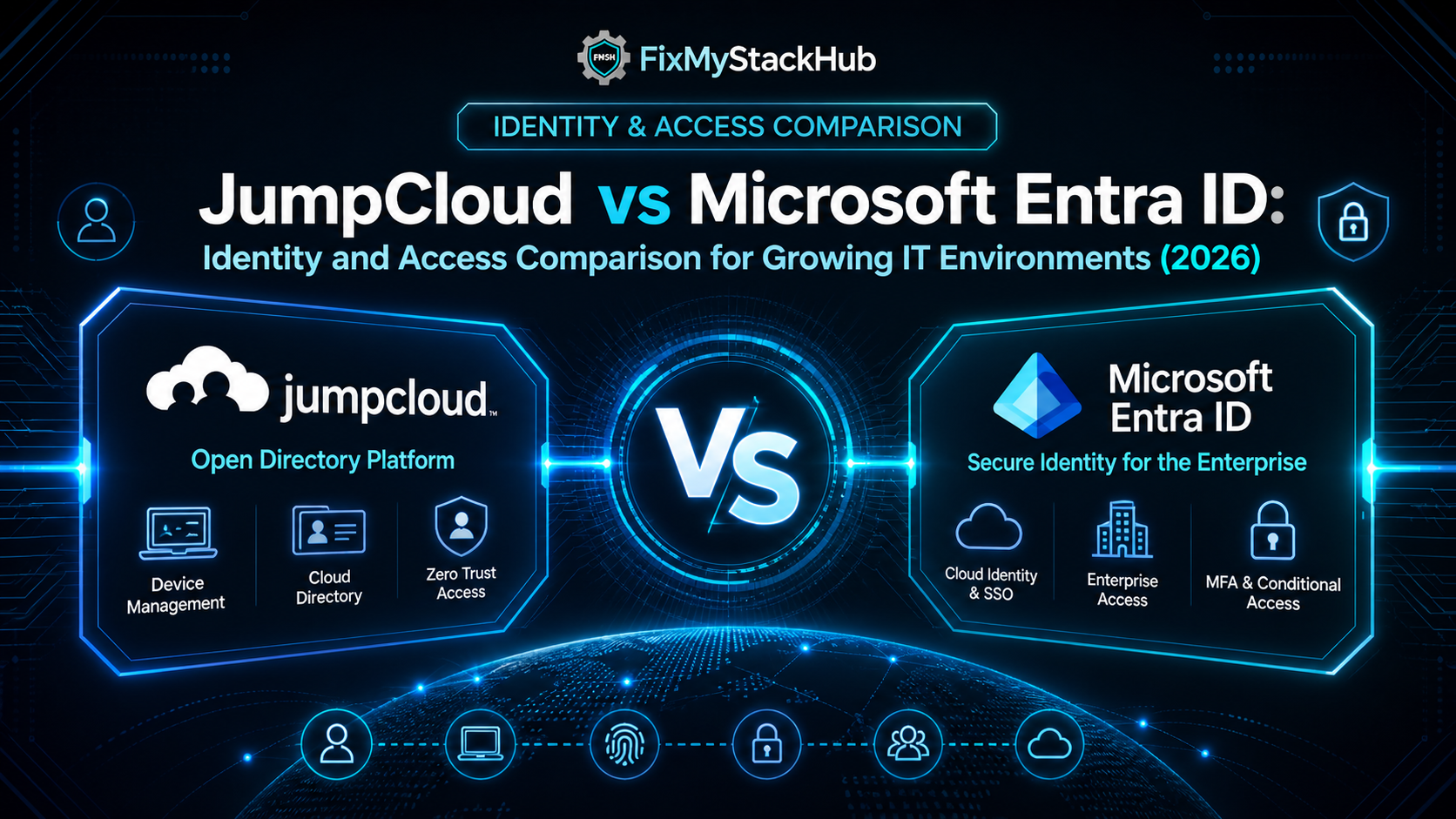
Growing IT environments often need more than just authentication. They need a way to manage users, directories, devices, and access controls without creating too much overhead. That is where JumpCloud and Microsoft Entra ID often enter the same conversation.
JumpCloud is often considered by businesses looking for a cloud directory and device-management-friendly identity layer, while Microsoft Entra ID is often selected by companies already using Microsoft services heavily. In this comparison, we break down JumpCloud vs Microsoft Entra ID across directory services, access management, device relevance, integrations, and pricing philosophy.
QUICK COMPARISON TABLE
| Category | JumpCloud | Microsoft Entra ID |
|---|---|---|
| Core Purpose | Cloud directory and access platform | Identity and access management platform |
| Ideal Customer | Growing teams needing identity + device visibility | Microsoft-heavy organizations |
| Directory Services | Strong cloud directory positioning | Strong Microsoft identity directory |
| Device Relevance | Helpful overlap with device/user management | Best when paired with Microsoft endpoint ecosystem |
| Ecosystem Fit | More flexible across environments | Best in Microsoft-centric stacks |
| Best Fit | SMB to mid-market IT environments | Enterprises or Microsoft-first businesses |
What is JumpCloud?
JumpCloud is a cloud-based directory and access platform designed to help organizations manage users, devices, and authentication across systems and environments.
It is often attractive to growing companies that want a cloud-first identity layer with device and directory relevance, especially where Microsoft is not the only center of gravity in the stack.
What is Microsoft Entra ID?
Microsoft Entra ID is Microsoft’s enterprise identity and access management platform, designed to manage authentication, user access, and policy control across Microsoft services and integrated applications.
It works best in organizations where Microsoft services already play a major role, especially when identity, productivity, endpoint, and security tooling are being managed together.
JumpCloud vs Microsoft Entra ID: Key Differences
| Feature Area | JumpCloud | Microsoft Entra ID |
|---|---|---|
| Identity Focus | Identity with directory/device relevance | Identity and access with Microsoft ecosystem depth |
| Device Context | Stronger cloud directory/device overlap | Stronger when paired with Microsoft endpoint stack |
| Ecosystem Neutrality | More flexible in mixed environments | Strongest in Microsoft-first environments |
| Admin Fit | Appealing for growing IT teams | Familiar for Microsoft admins |
| Best Use Case | Mid-market cloud-first identity control | Enterprise identity within Microsoft stack |
Pros and Cons
| Category | JumpCloud | Microsoft Entra ID |
|---|---|---|
| Strengths | Cloud-first directory value Good for growing IT environments Useful overlap with devices and users | Strong Microsoft integration Excellent access and identity control inside Microsoft stack Good enterprise readiness |
| Limitations | Less dominant in very Microsoft-heavy environments | Less neutral in mixed vendor environments |
Which One Should You Choose?
Choose JumpCloud if your business wants a flexible cloud directory and access platform that works across a broader range of environments.
Choose Microsoft Entra ID if you are already invested in Microsoft and want identity and access to sit close to your existing stack.
Related Comparison
You may also want to compare OneLogin vs JumpCloud if your shortlist includes more mid-market identity platforms.