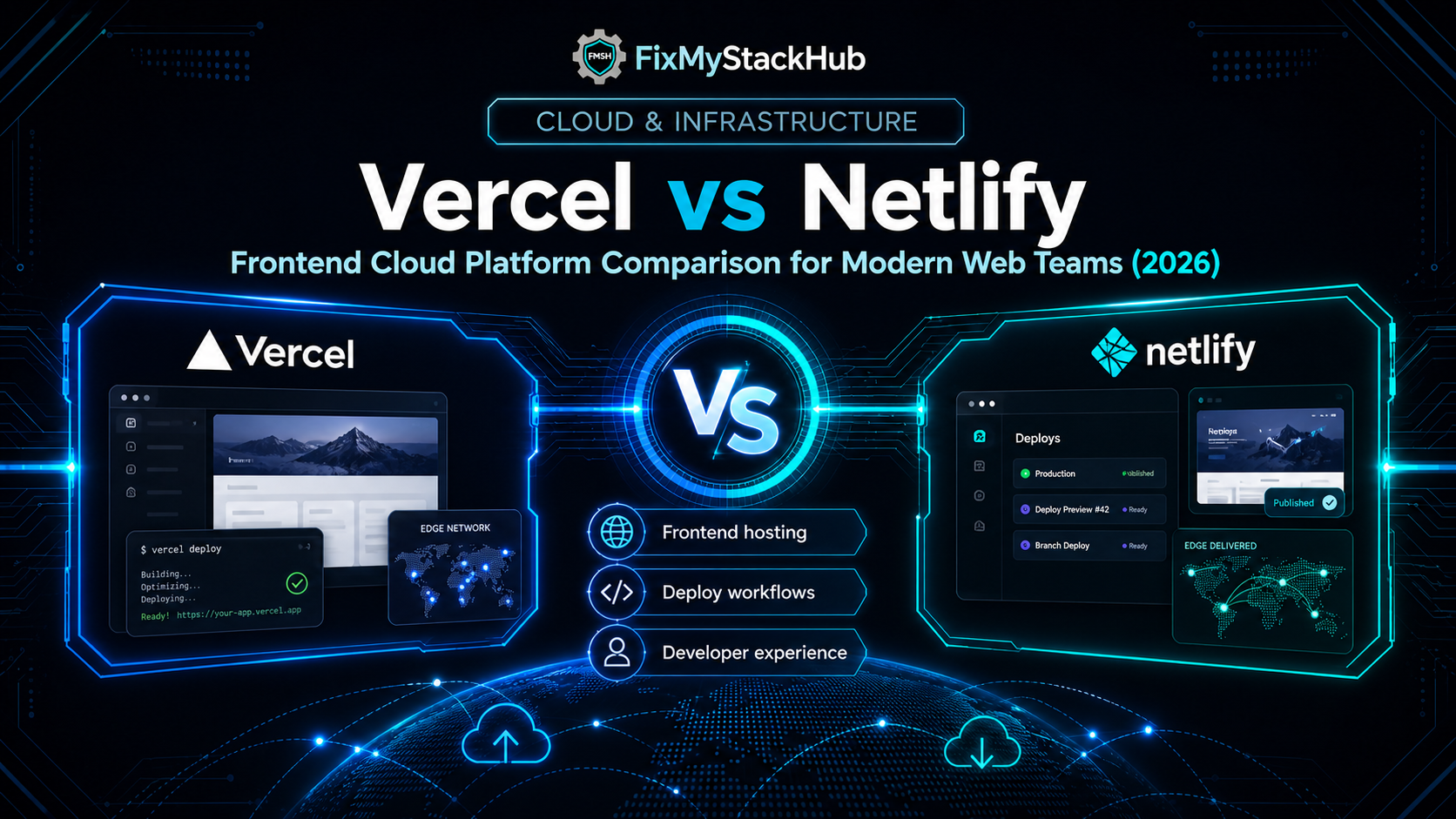
For frontend and web teams, Vercel and Netlify are two of the most familiar deployment platforms on the shortlist. Vercel positions itself as the AI cloud for building, scaling, and securing faster web experiences, while Netlify positions itself as one platform to create with AI or code and deploy instantly on production infrastructure.
That means the decision is often not about whether either platform can deploy a web project. Both can. The real choice is about developer workflow, framework alignment, deployment philosophy, and whether your team cares more about Vercel’s strong frontend-cloud positioning or Netlify’s more accessible build-and-ship experience. In this FixMyStackHub comparison, we break down Vercel vs Netlify across deployment, workflow fit, feature positioning, and business use cases.
QUICK COMPARISON TABLE
| Category | Vercel | Netlify |
|---|---|---|
| Core Purpose | Frontend cloud for building and deploying web experiences | Platform to build and ship websites and apps |
| Ideal Customer | Frontend-focused teams, especially with modern app stacks | Teams wanting fast deployment and accessible web operations |
| Product Positioning | AI cloud and frontend developer platform | Build-and-ship platform for web projects |
| Deployment Experience | Strong for modern frontend workflows | Strong for quick site deployment and CI/CD simplicity |
| Ecosystem Fit | Strong with Vercel-centered frontend workflows | Strong for general web teams and broader deployment simplicity |
| Best Fit | Frontend-heavy modern app teams | Teams wanting simple, fast web delivery |
What is Vercel?
Vercel describes itself as the AI cloud and a platform for frontend developers to build, scale, and secure faster web experiences. Its positioning emphasizes modern app development, performance, deployment speed, and frontend-centric workflows. Vercel also publishes observability tooling aligned with app architecture.
Teams often choose Vercel when frontend performance, modern framework workflows, and a developer-first cloud experience are central to the product.
What is Netlify?
Netlify describes itself as a platform to create with AI or code and deploy instantly on production infrastructure. Its docs also emphasize developer tools like APIs, CLI, SDKs, and automated workflows, and its platform materials highlight CI/CD-style deployment for modern web projects.
Organizations often choose Netlify when they want a clean deployment experience, strong automation for site delivery, and an approachable platform for shipping web projects quickly.
Vercel vs Netlify: Key Differences
| Feature Area | Vercel | Netlify |
|---|---|---|
| Platform Identity | Frontend cloud and AI-ready web platform | Build-and-ship web platform |
| Developer Fit | Strong frontend-developer orientation | Broad web-team usability |
| Workflow Feel | Framework- and app-oriented | CI/CD and web-delivery oriented |
| Product Positioning | Performance and modern frontend focus | Accessible deployment and shipping focus |
| Best Fit | Frontend-heavy application teams | General web teams and fast site shipping |
The biggest difference is where each platform feels most at home. Vercel is often the stronger fit for teams building modern frontend applications where performance and developer workflow are central. Netlify is often the stronger fit for teams that want a straightforward path from code to production with less platform complexity.
Pros and Cons
| Category | Vercel | Netlify |
|---|---|---|
| Strengths | Strong frontend developer identity Modern app and performance focus Clear AI-cloud positioning | Easy deployment experience Strong web-project shipping workflow Good CI/CD-style usability |
| Limitations | Best value often tied to modern frontend-centric teams | May feel less frontend-specialized than Vercel for some app teams |
Which One Should You Choose?
Choose Vercel if your priority is a frontend-focused cloud platform with strong performance and modern app workflow alignment.
Choose Netlify if your team values straightforward web deployment, simple build pipelines, and an accessible developer experience.
Related Comparison
You may also want to compare AWS vs Microsoft Azure if your hosting decision is part of a broader infrastructure platform choice.