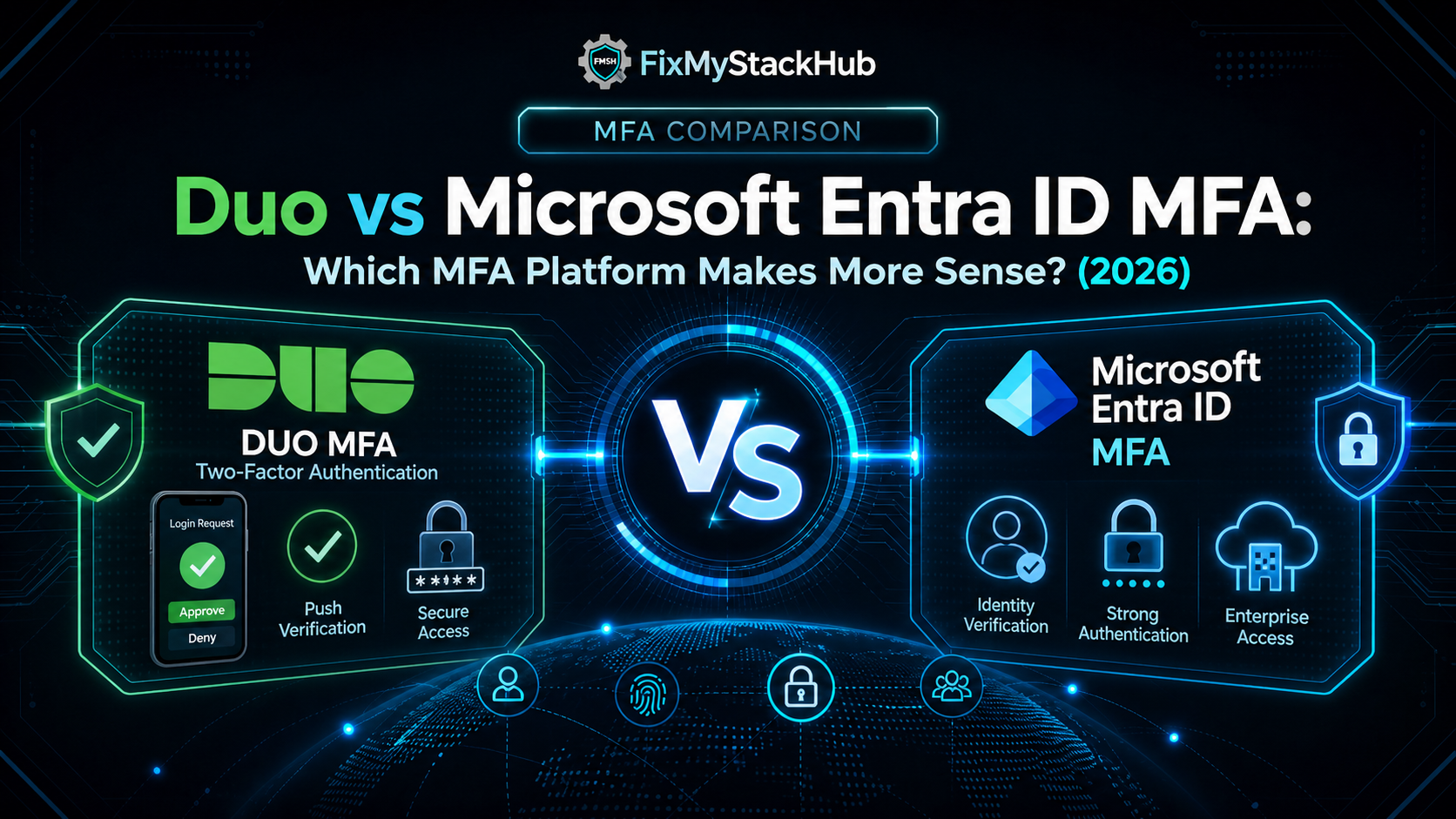
Multi-factor authentication is now a basic requirement for business security, but the platform behind it still matters. Duo and Microsoft Entra ID MFA both help organizations strengthen access security, yet they sit in different strategic positions.
Duo is often chosen as a dedicated security access platform, while Microsoft Entra ID MFA is frequently adopted as part of a broader Microsoft identity and access strategy. In this comparison, we break down Duo vs Microsoft Entra ID MFA across usability, security controls, ecosystem fit, administration, and business value.
QUICK COMPARISON TABLE
| Category | Duo | Microsoft Entra ID MFA |
|---|---|---|
| Core Purpose | Standalone MFA and secure access | MFA inside Microsoft identity and access stack |
| Ideal Customer | Businesses wanting dedicated MFA/security access tooling | Microsoft-first organizations |
| User Experience | Known for ease of use | Strong within Microsoft login experience |
| Ecosystem Fit | Broad security access use cases | Best inside Microsoft ecosystem |
| Device Trust | Strong access security positioning | Strong when combined with Microsoft conditional access |
| Best Fit | Security-led MFA choice | Microsoft-native MFA strategy |
What is Duo?
Duo is a security-focused access platform known for multi-factor authentication, device trust, and secure access controls. It is widely recognized for simple user experience and strong MFA deployment across different business sizes.
Organizations often choose Duo when they want a dedicated MFA layer that is easy to deploy, familiar to users, and positioned clearly around access security.
What is Microsoft Entra ID MFA?
Microsoft Entra ID MFA is Microsoft’s multi-factor authentication capability built into its broader identity and access platform. It works closely with Microsoft accounts, conditional access policies, and Microsoft security tooling.
Businesses often adopt it when Microsoft is already central to their environment, because MFA becomes part of a wider identity, policy, and administration approach.
Duo vs Microsoft Entra ID MFA: Key Differences
| Feature Area | Duo | Microsoft Entra ID MFA |
|---|---|---|
| MFA Experience | Strong user-friendly MFA experience | Strong Microsoft-native authentication flow |
| Ecosystem Fit | More standalone and security-led | Best when Microsoft tools are central |
| Policy Depth | Strong access controls | Stronger when combined with Microsoft conditional access |
| Admin Simplicity | Clear dedicated access tool positioning | Easier if Microsoft admins already manage the environment |
| Best Use Case | Dedicated MFA/security layer | MFA embedded into Microsoft identity strategy |
Pros and Cons
| Category | Duo | Microsoft Entra ID MFA |
|---|---|---|
| Strengths | User-friendly MFA Strong standalone security access focus Good cross-environment relevance | Excellent Microsoft ecosystem fit Strong when paired with conditional access Can add value inside existing Microsoft licensing |
| Limitations | Separate cost and platform layer Less naturally bundled into Microsoft-heavy environments | Best value depends on Microsoft stack investment Less neutral in mixed environments |
Which One Should You Choose?
Choose Duo if you want a dedicated MFA and access security platform with strong usability and clear security positioning.
Choose Microsoft Entra ID MFA if your organization is already built around Microsoft identity, access, and conditional access tooling.
Related Comparison
You may also want to compare Microsoft Entra ID vs Okta if your access strategy involves broader identity decisions beyond MFA.